
Petite Style Advice
Dressing for a Long Torso and Short Legs: What Works and Why
Forget dos and don’ts – learn the foundational principles of how clothing shapes the appearance of your vertical proportions.
If you feel like your proportionally long torso and short legs make you look shorter than you are, you’re not imagining it. When your upper body takes up most of your height and your hip line is closer to the floor, the visual center of mass is lowered, creating a grounded impression.
When it comes to your personal style, your instinct might be to follow conventional petite fashion advice for its elongating effects. Following it religiously, though, might actually hold you back. Some styles considered “off-limits” may work in your favor when worn strategically.
In this article, I’m sharing the exact protocol for these vertical proportions, straight from the Shortie Style System, my personal style program for Shorties. I’m confident you’ll find this breakdown easy to remember and, most importantly, super practical whether you’re styling or shopping.
Waist Placement
Your torso and leg lengths are the two main components of your vertical proportions. The third is where your natural waist sits. Together, they shed light on which necklines, garment lengths, waistlines and rises may suit you best.
Shorties with a proportionally longer torso tend to have a lower waist, so for the sake of keeping things simple, we’ll focus on that combination here. Don’t worry – even if your waist sits higher, the guidance will still be useful.
I’ve had the privilege of coaching Shorties with proportionally long torsos and short legs but different waist placements. The vertical proportion guidance in their style guides was virtually the same.
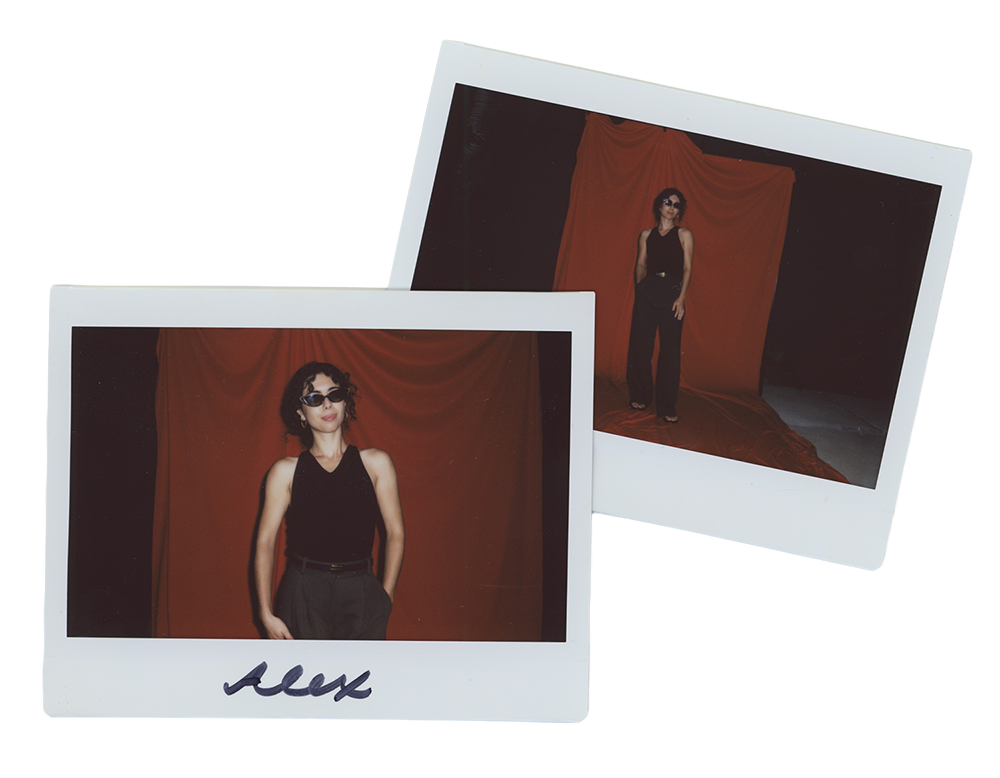
Our Shortie Model
One of those Shorties is Alex, who graciously spent an entire weekend modeling for us. She’s 5′1″ / 155 cm and has a proportionally longer torso, shorter legs and a lower natural waist.
Styling Advice
Advice on rebalancing vertical proportions often reads like a list of dos and don’ts, with little explanation of the design principles behind them. Those lists tend to be longer than necessary because several tips apply the same principle in different ways.
Once you understand the principles behind the advice, you’ll find yourself instinctively styling more balanced outfits without memorizing a list of what to wear. It’s the difference between learning a subject and memorizing answers for a test.
Perception Over Reality
It’s worth remembering that people don’t really see our figures. Instead, they see the visual effect created by what we wear, which is why our frames can look so different from one outfit to another.
Our Goal Is Balance
“How to look taller” messaging is rampant in petite fashion advice. Some Shorties can’t resist clicking. Others reject it, commenting that we should embrace our low stature – and rightfully so. Acceptance precedes authentic personal style.
This is where motivation matters: our goal is to strike visual balance. Think of our bodies as canvases with less vertical space, where every element has a bigger impact. Like artists, we have to consider the canvas and place each element with intention. An outfit styled with our proportions in mind can result in a taller impression. Looking taller is a byproduct, not our main objective.
The Strategy
For a proportionally long torso and short legs, that intention comes down to two strategies:
Downplay the torso’s length
Highlight the legs’ length
It's really that simple.
The Tools
Our levers for creating balance are five elements of fashion design: line, shape, pattern, texture and color. When you change one element, you change how your frame appears. Here, the first four are our tools for visually adjusting vertical proportions.
Since the fall of 2020, I’ve been studying how these design elements interact with the body. Making those complex interactions easier to understand is one of the foundations of the Shortie Style System. I’ll walk you through the part of the program that explains how to downplay the torso’s length and highlight the legs’ length, one element at a time.
LINE
Lines attract the eye and guide it.
Horizontal lines encourage the gaze to move from side to side, drawing attention across the area they cross and breaking up its length.
Think empire waistlines, wide waistbands and boat necklines:
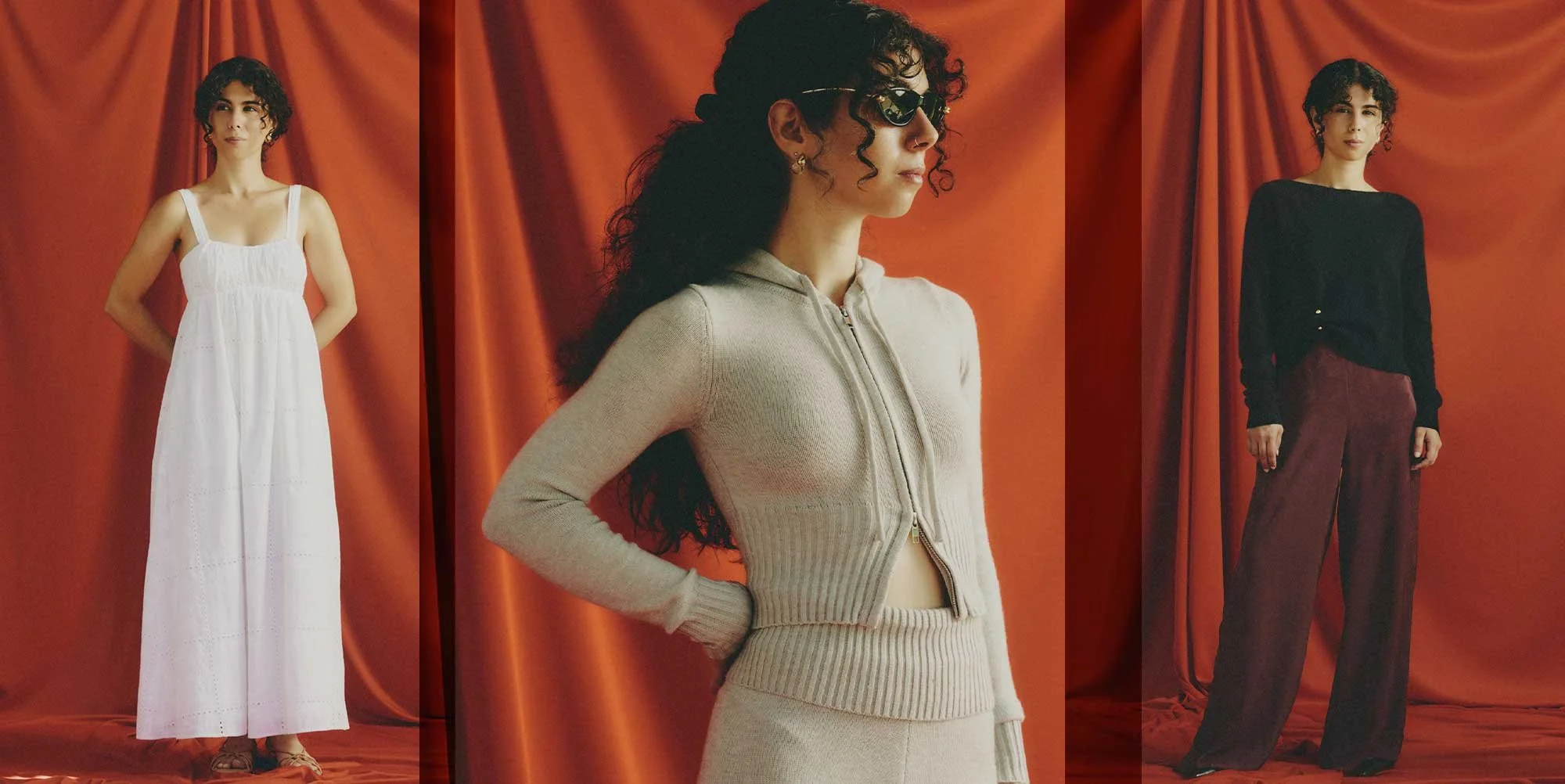
Abercrombie dress (petite); Lioness set; Charter Club sweater (petite), Ann Taylor pant (petite).
By contrast, vertical lines guide the gaze up and down, creating a lengthening effect.
Pintucks, slits and front creases are all examples:
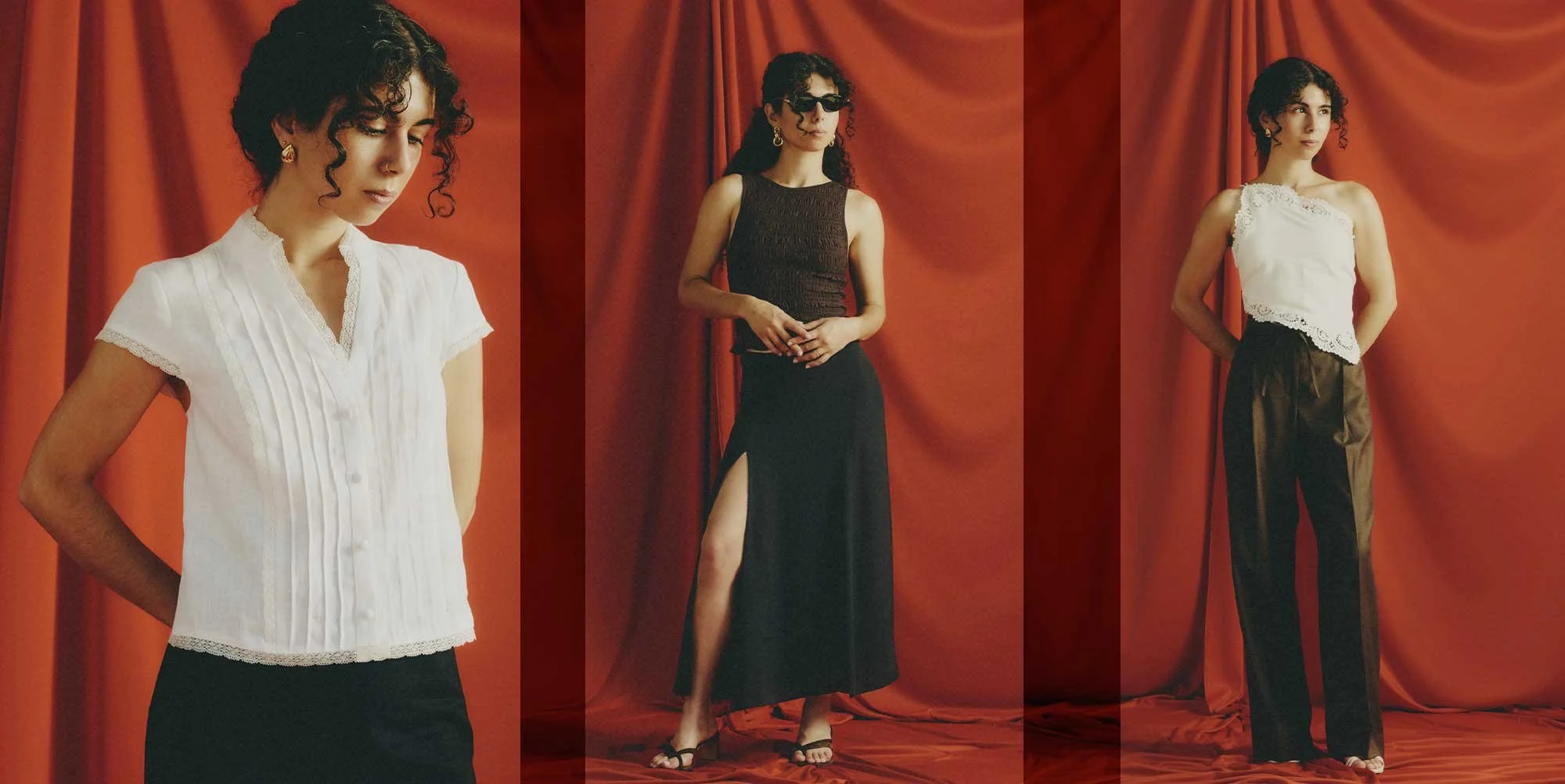
Reformation top; Next top (petite), Reformation skirt (petite); Posse top, Reiss pants (petite).
Diagonal lines move the gaze at an angle. Contrary to conventional wisdom, they don’t all have an elongating effect.
Shorter diagonals can interrupt the sense of length in the area they occupy.
You can see this in the lines created by V-shaped necklines and waistbands:
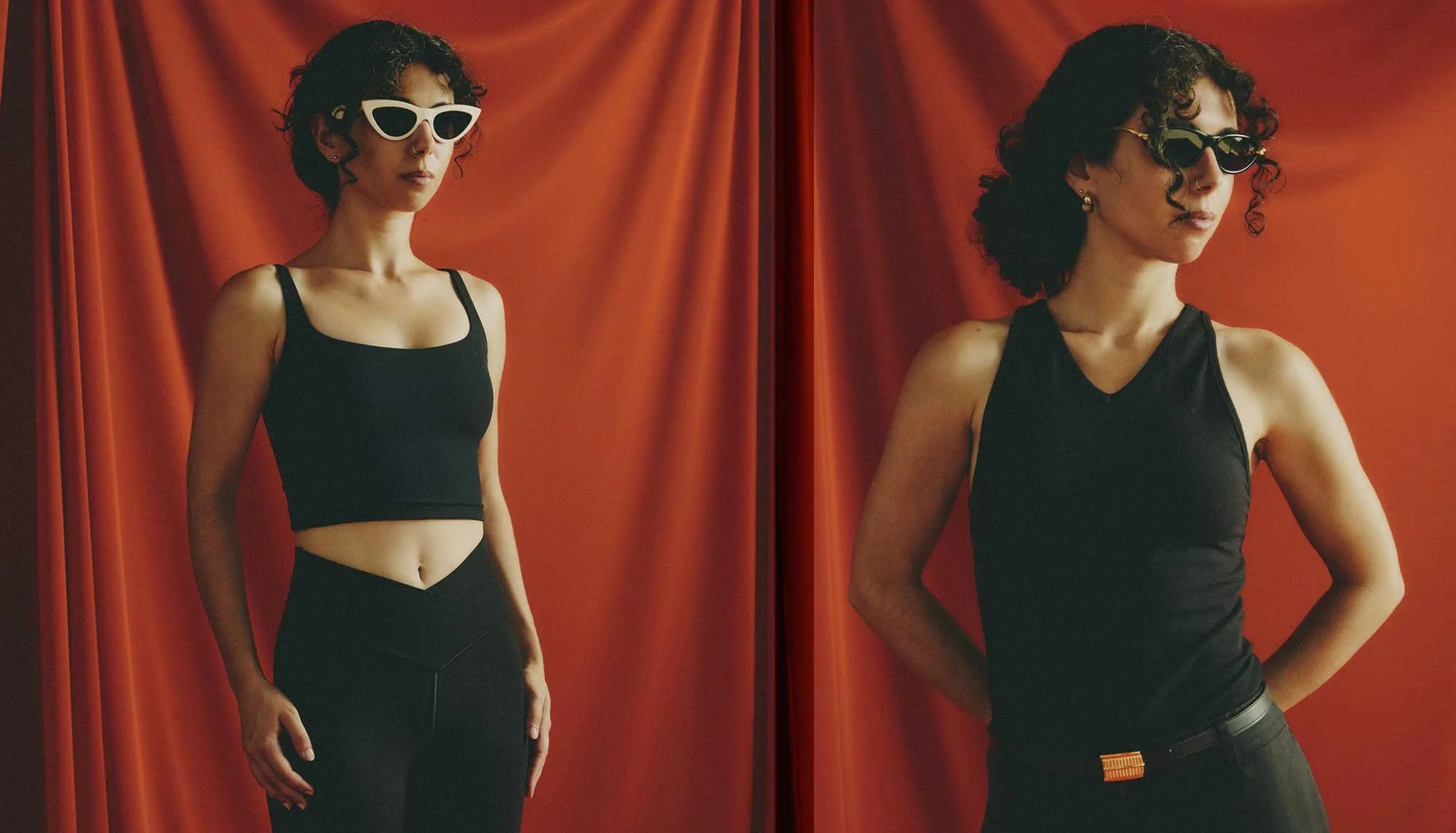
Crz Yoga top, Aerie leggings (short); Reformation top, Edited Pieces belt (petite).
Longer diagonals can visually lengthen the area they occupy.
Notice the sloping lines of flared pants, a tent dress and a skirt with a dramatic asymmetrical hem:
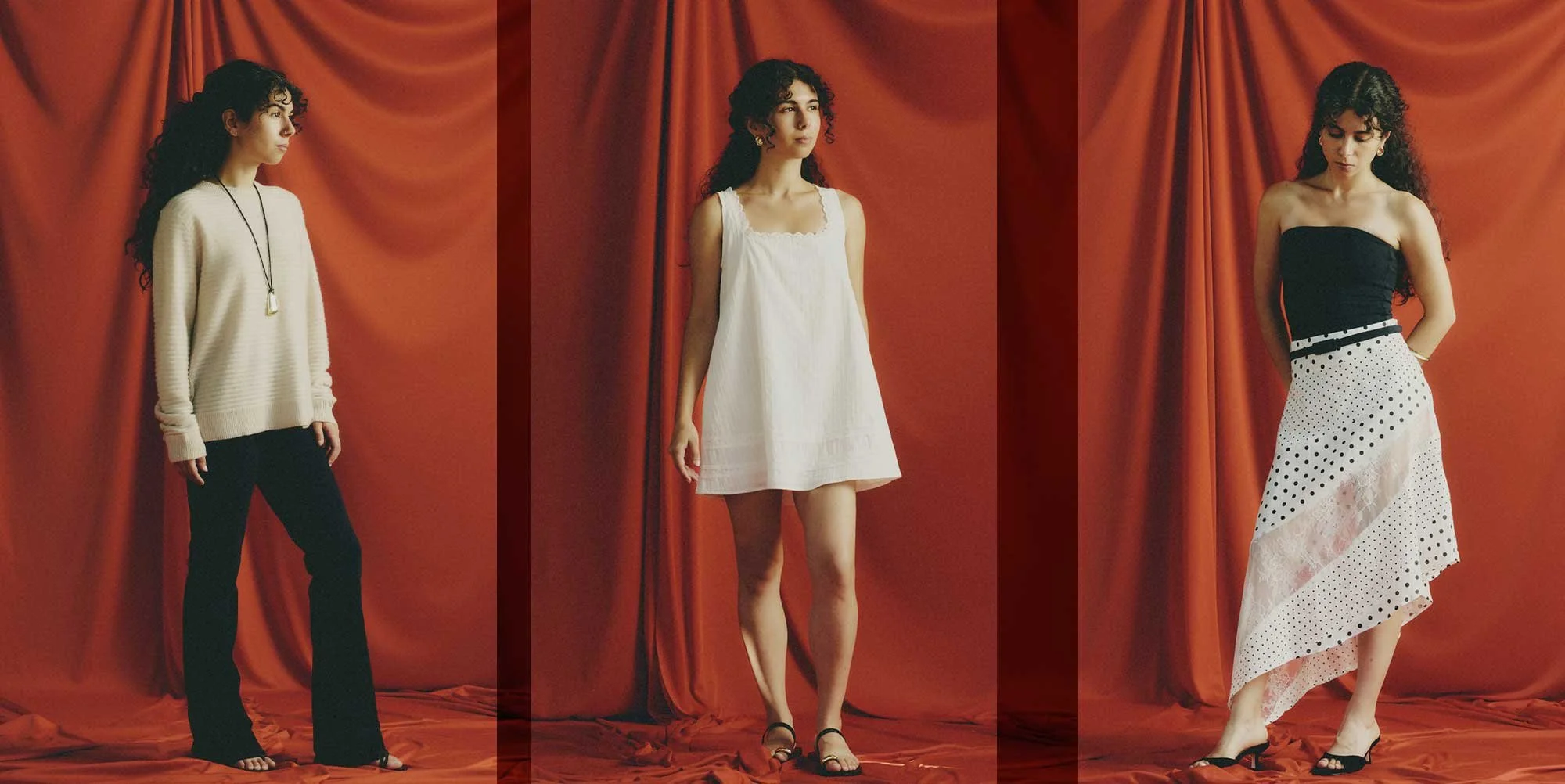
Reformation sweater, Paige jeans (petite); Princess Polly dress (petite); Crz Yoga top, Princess Polly skirt (petite).
A longer uninterrupted line creates a stronger sense of length.
A long slit, for example, has a stronger lengthening effect than a short one:
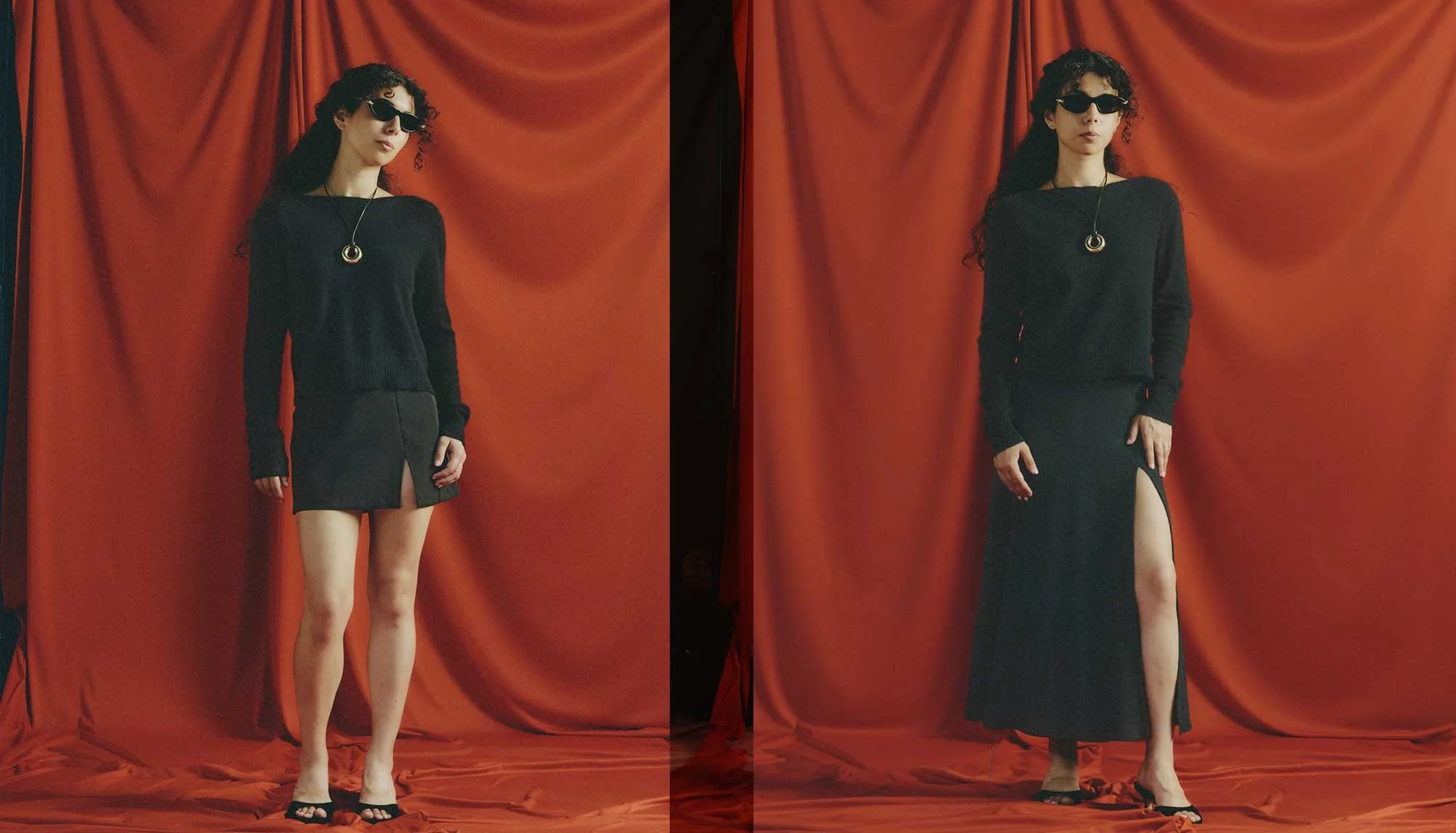
Charter Club sweater (petite), Steve Madden skirt; Charter Club sweater (petite), Reformation skirt (petite).
V-shaped necklines illustrate this particularly well.
The longer diagonal lines of a plunging neckline emphasize the upper body’s length, while the shorter lines of a shallow V-neck place less emphasis on it:
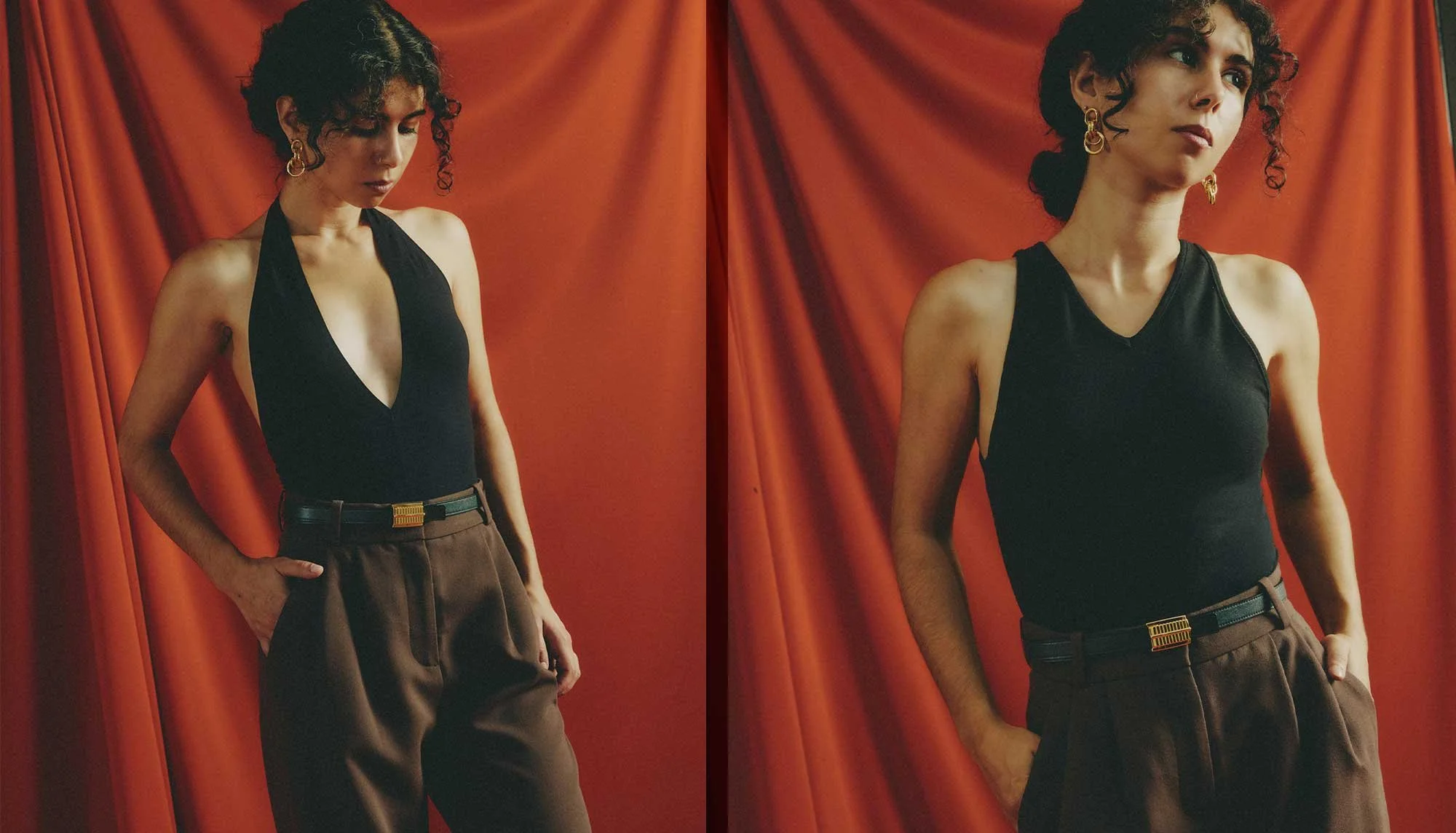
Commando bodysuit, Edited Pieces belt (petite), Abercrombie pants (petite); Reformation top, Edited Pieces belt (petite), Abercrombie pants (petite).
Alex could put these principles to work with an off-the-shoulder top and high-rise palazzo pants:
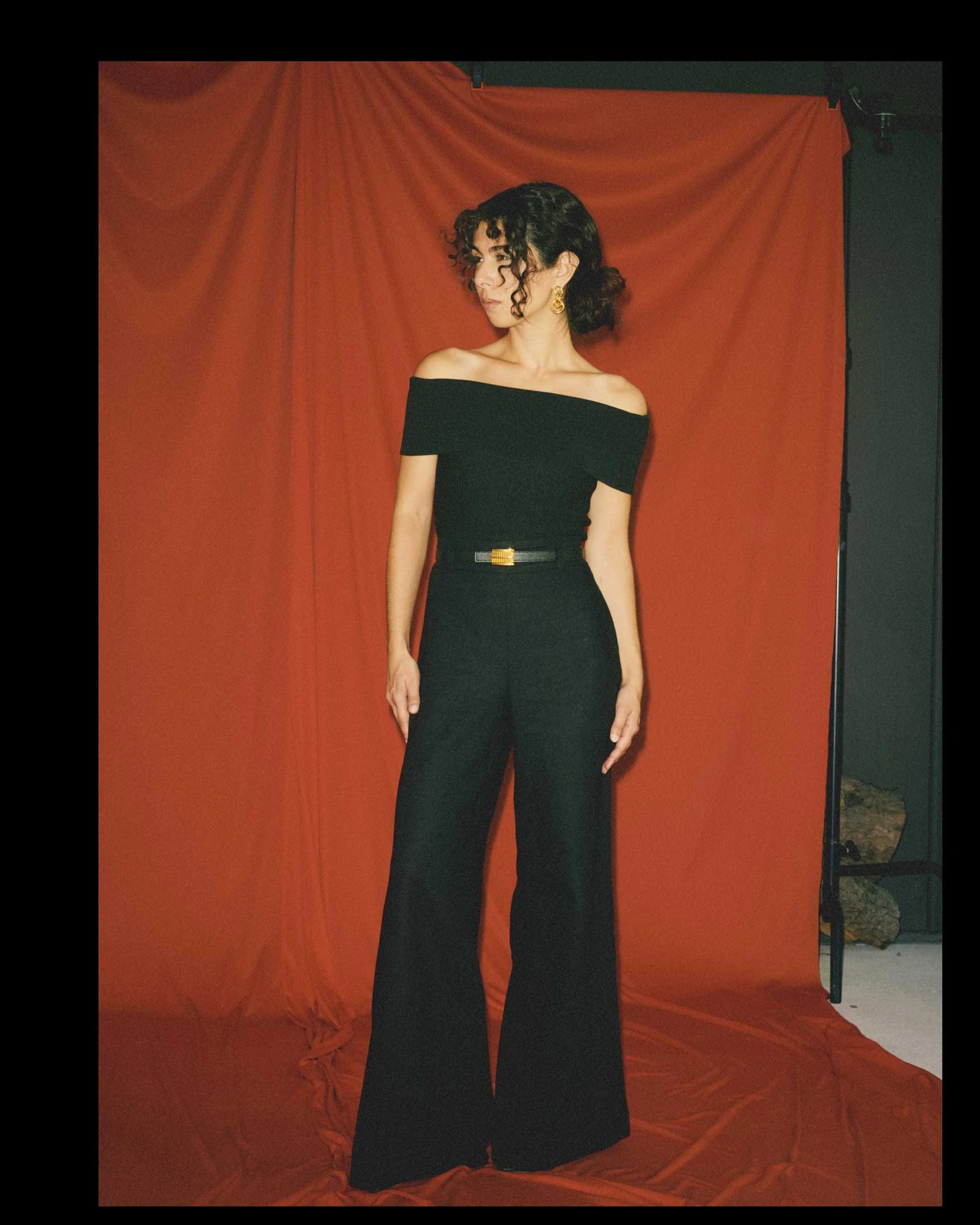
DL1961 top, Edited Pieces belt (petite), Ann Taylor pants (petite).
Off-the-shoulder top: The horizontal neckline draws attention across her shoulders, downplaying her torso’s length.
High-rise palazzo pants: The long diagonal lines emphasize the length of her legs.
SHAPE
Shapes influence how we perceive the areas they cover.
A shorter top can make the torso appear shorter, while a longer top can make it appear longer.
You can see the difference between a crop top and a tunic:
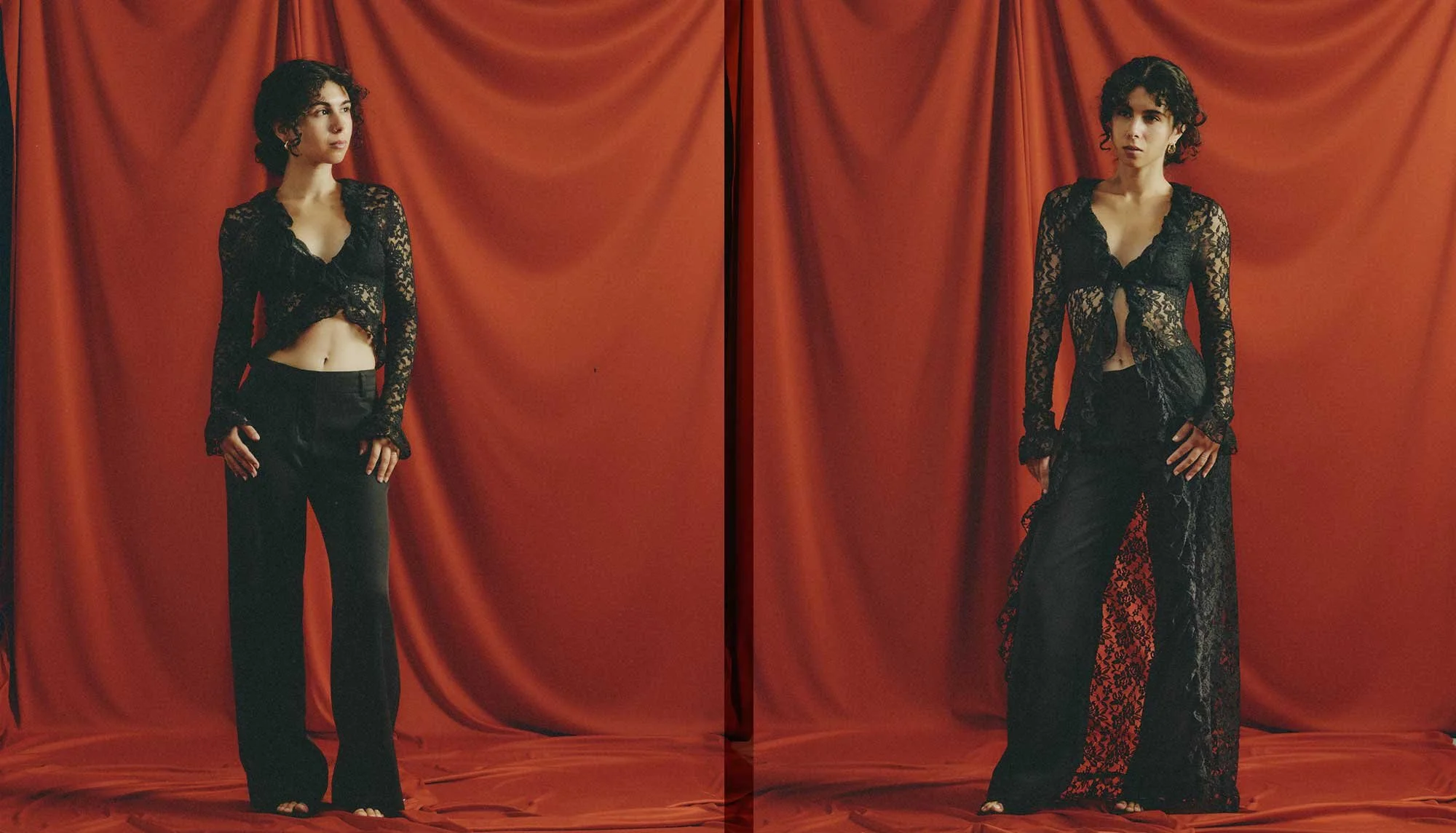
Lioness top, Reformation pants (petite); Lioness top, Reformation pants (petite).
In terms of bottoms, a low rise makes the legs appear shorter, while a high rise makes them appear longer:
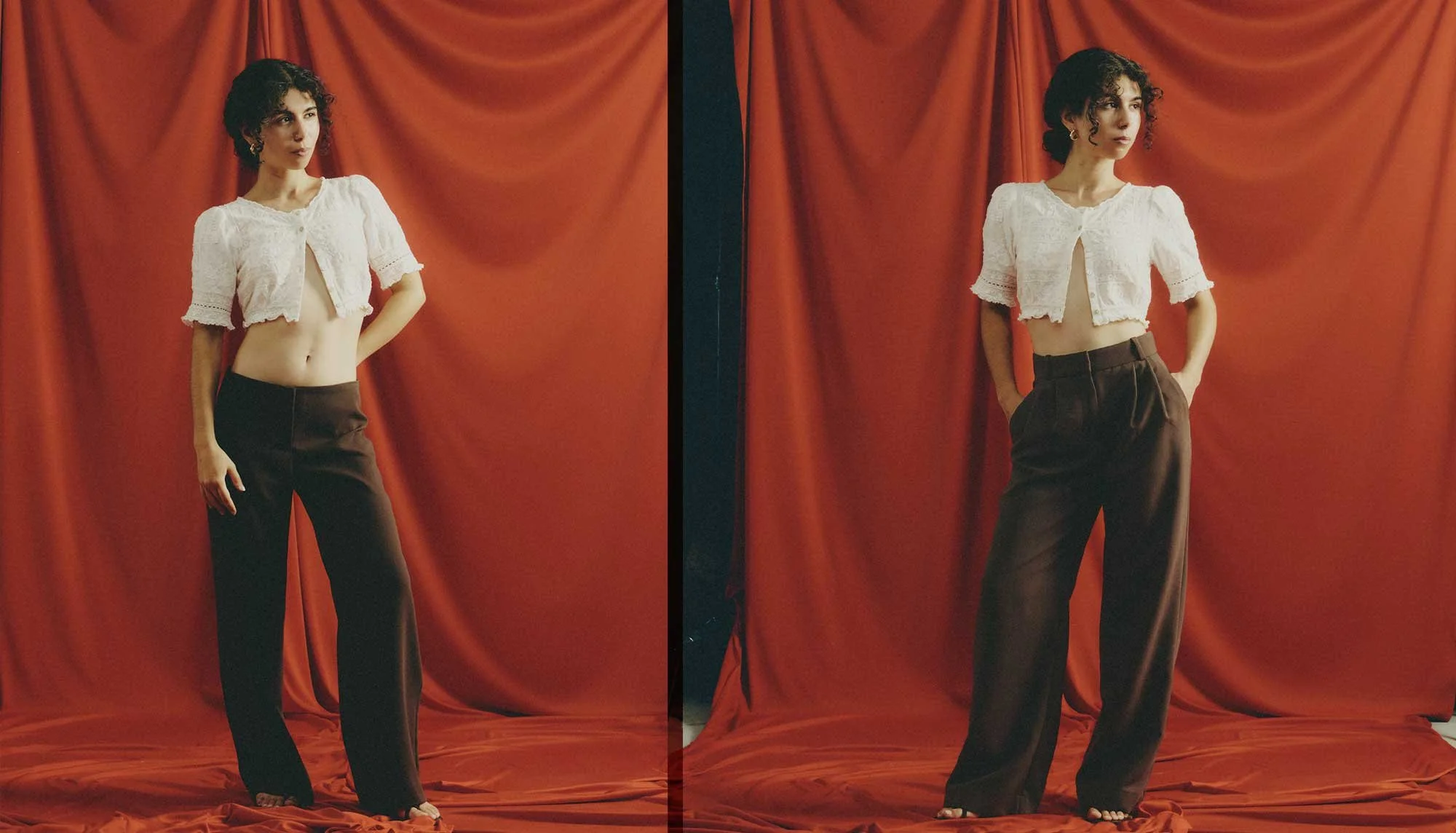
Love Shack Fancy top, Abercrombie pant (petite); Love Shack Fancy top, Abercrombie pant (petite).
Hem length influences how tall the overall frame appears.
Here, Alex looks shorter in the short black dress and taller in the full-length white one:
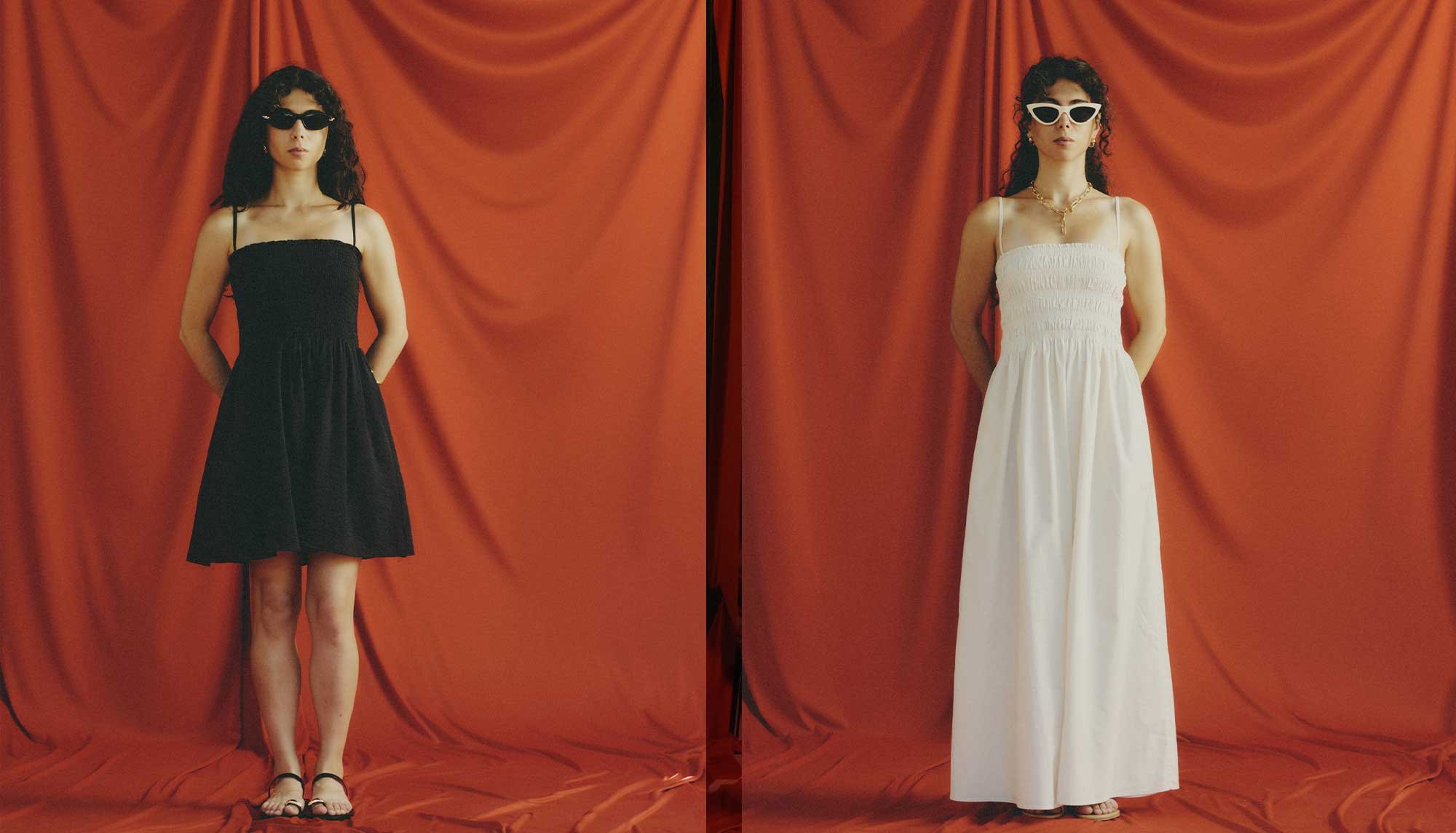
Loft dress (petite); Pistola dress.
Taking these principles into account, Alex could pair a cropped top with high-rise, full-length pants:
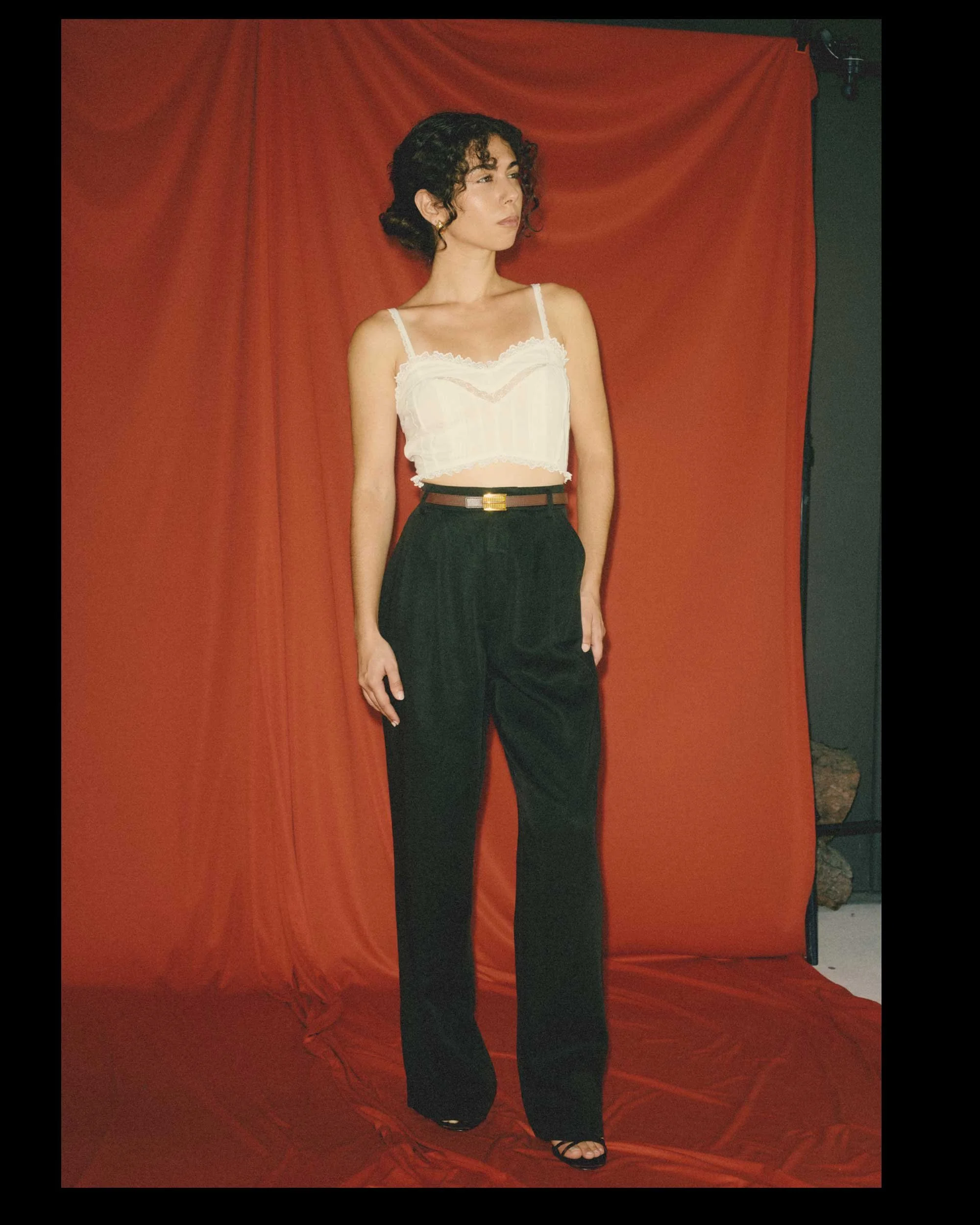
Steve Madden top, Edited Pieces belt (petite), Reformation pant (petite).
Cropped top: The short bodice makes the torso appear shorter.
High-rise, full-length pants: The high waist and floor-length hems create a longer lower-body silhouette.
PATTERN
Patterns attract attention and change how we perceive the areas they cover.
A pattern with a dominant vertical direction can emphasize an area’s length, while one with a dominant horizontal direction can draw attention across it.
Notice how the elongated shapes in the print on the left draw the eye down the dress, emphasizing length. By contrast, the broad bands of color on the right draw attention across the frame, downplaying that length:
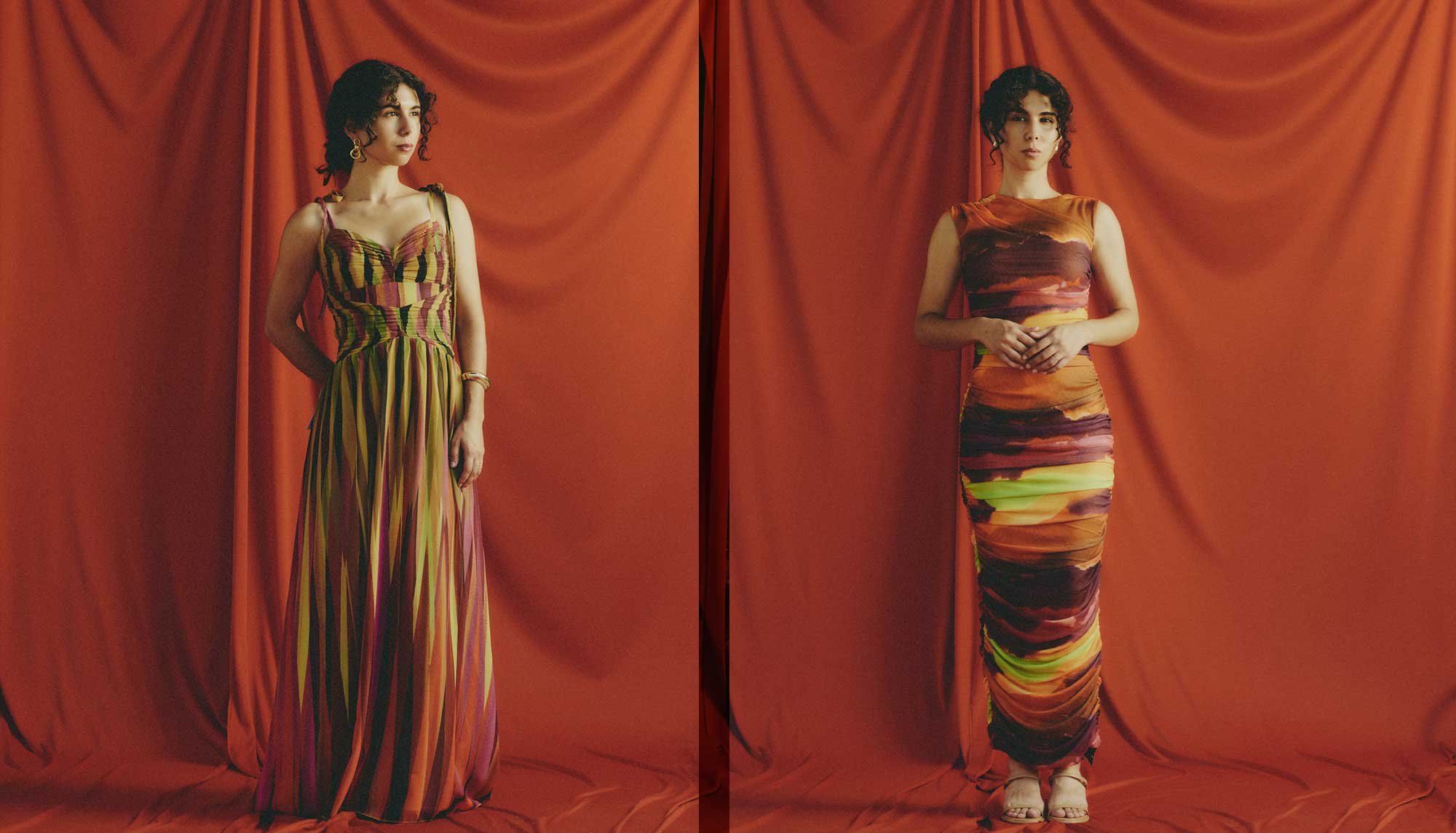
Lispy dress (petite); Karen Millen dress (petite).
I had fully bought into the idea of avoiding horizontal stripes in favor of vertical ones, so imagine my surprise when I discovered that some horizontal stripes can actually create a lengthening effect.
Research on the Helmholtz illusion shows that horizontal stripes can make a shape appear taller than vertical stripes do, with thin dark lines on a light background strengthening the effect. In styling, closely spaced horizontal lines are sometimes described as steps on a ladder, leading the eye upward – just take a look at the difference in these photos:
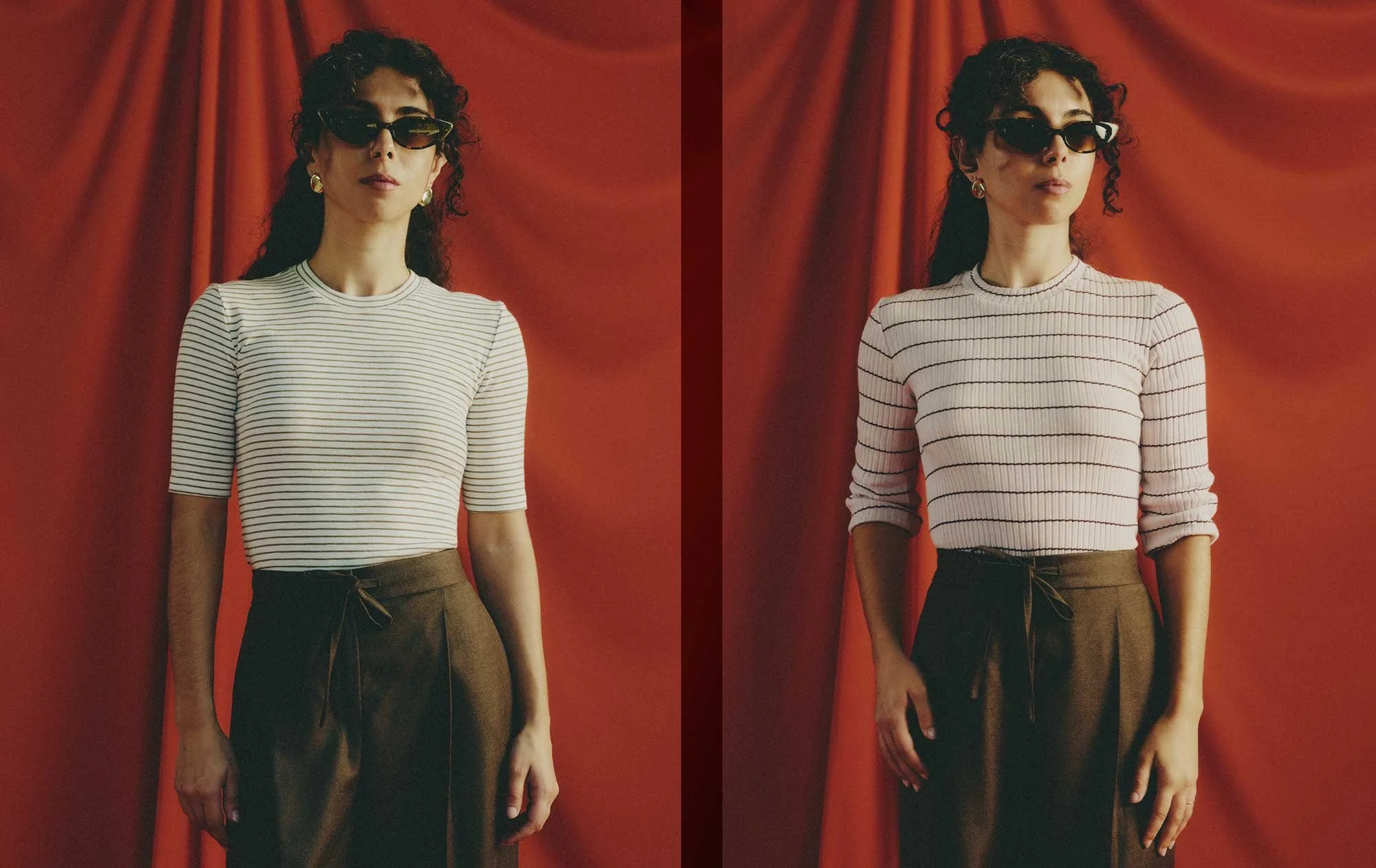
Vince top, Reiss pant (petite); Vince top, Reiss pant (petite).
Both tops feature thin, dark horizontal stripes on a light background, but the spacing differs. The widely spaced stripes on the right make Alex’s torso appear broader. The closely spaced stripes on the left don’t create the same widening effect, giving her torso a more elongated appearance by comparison.
For Alex, balancing her vertical proportions through pattern could look something like this:
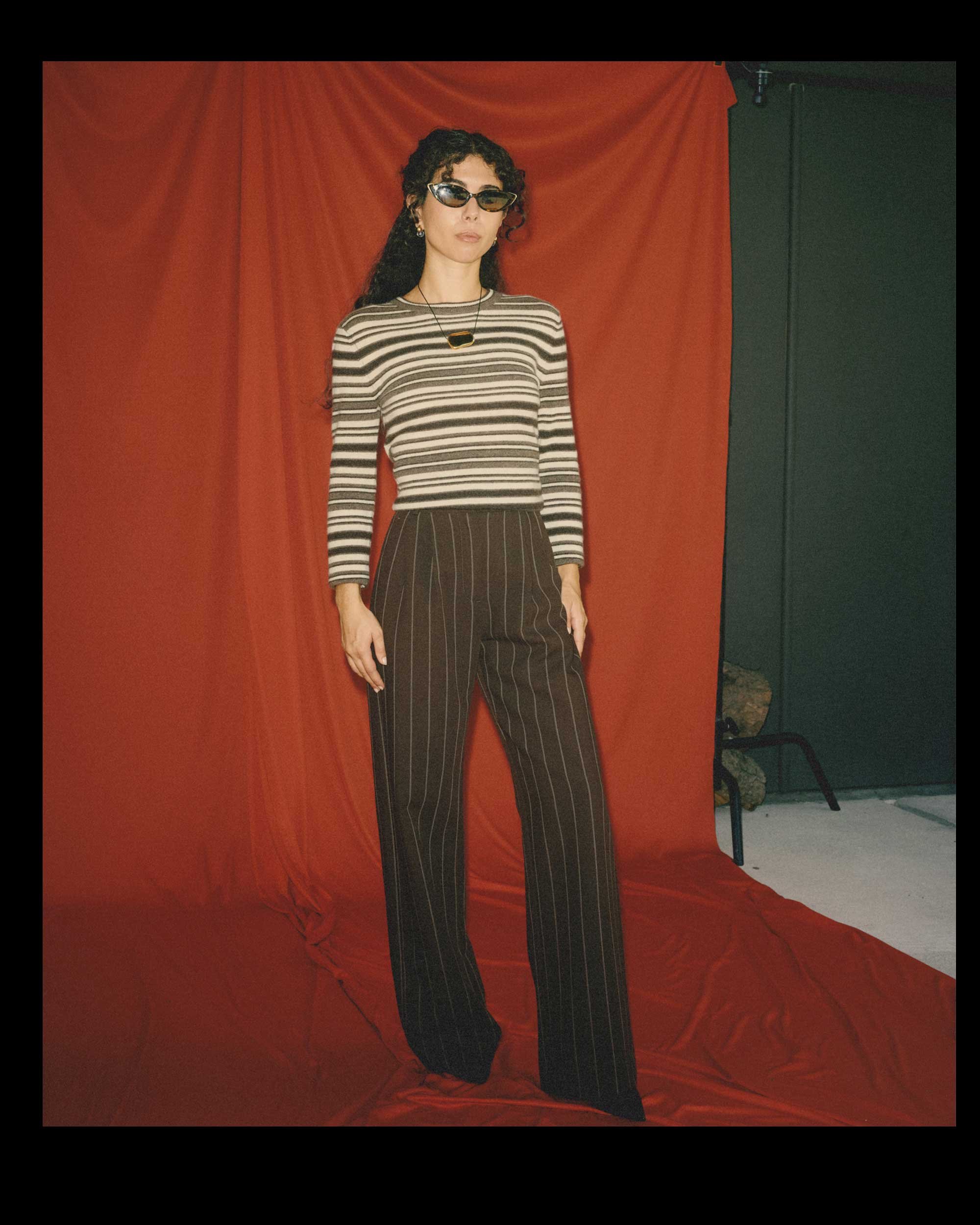
Reformation sweater, Abercrombie pant (petite).
Horizontally patterned top: The widthwise arrangement draws the gaze across her torso, downplaying its length.
Vertically patterned pants: The lengthwise direction guides the eye along her legs, emphasizing their length.
TEXTURE
Texture shares many of the same principles as line, but in a much softer way. It subtly highlights the area it covers and quietly guides the eye.
Like lines, horizontally oriented textures draw attention across the areas they cover, whereas vertically oriented textures emphasize length. Short diagonal details can interrupt that sense of length, and longer ones can reinforce it.
Some textures, including rib knits, can run horizontally, vertically or diagonally:
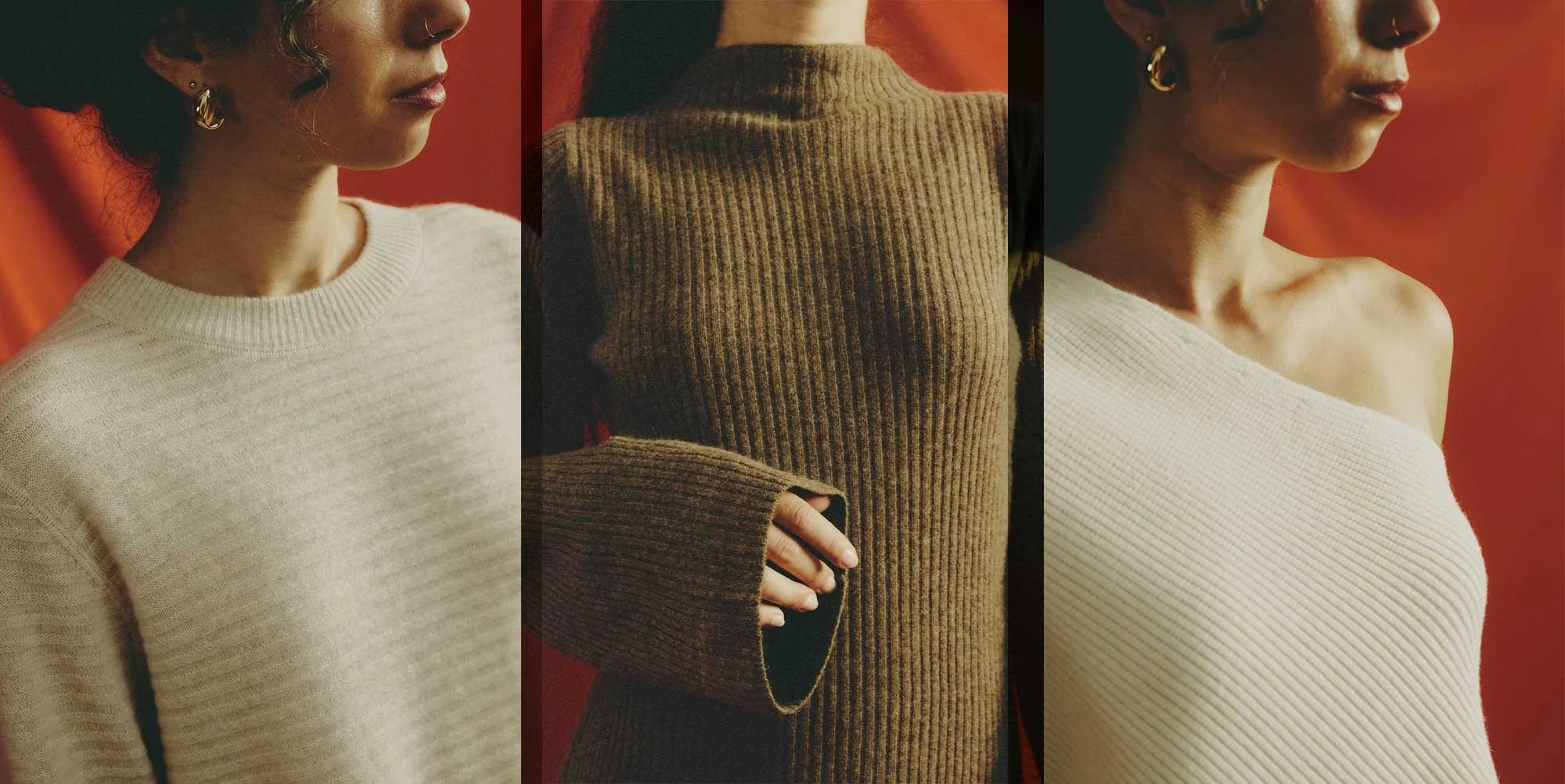
Reformation sweater, Lakasha sweater, Lioness sweater.
Other textures, like fringe, gathers and plissé, often appear in a vertical orientation:
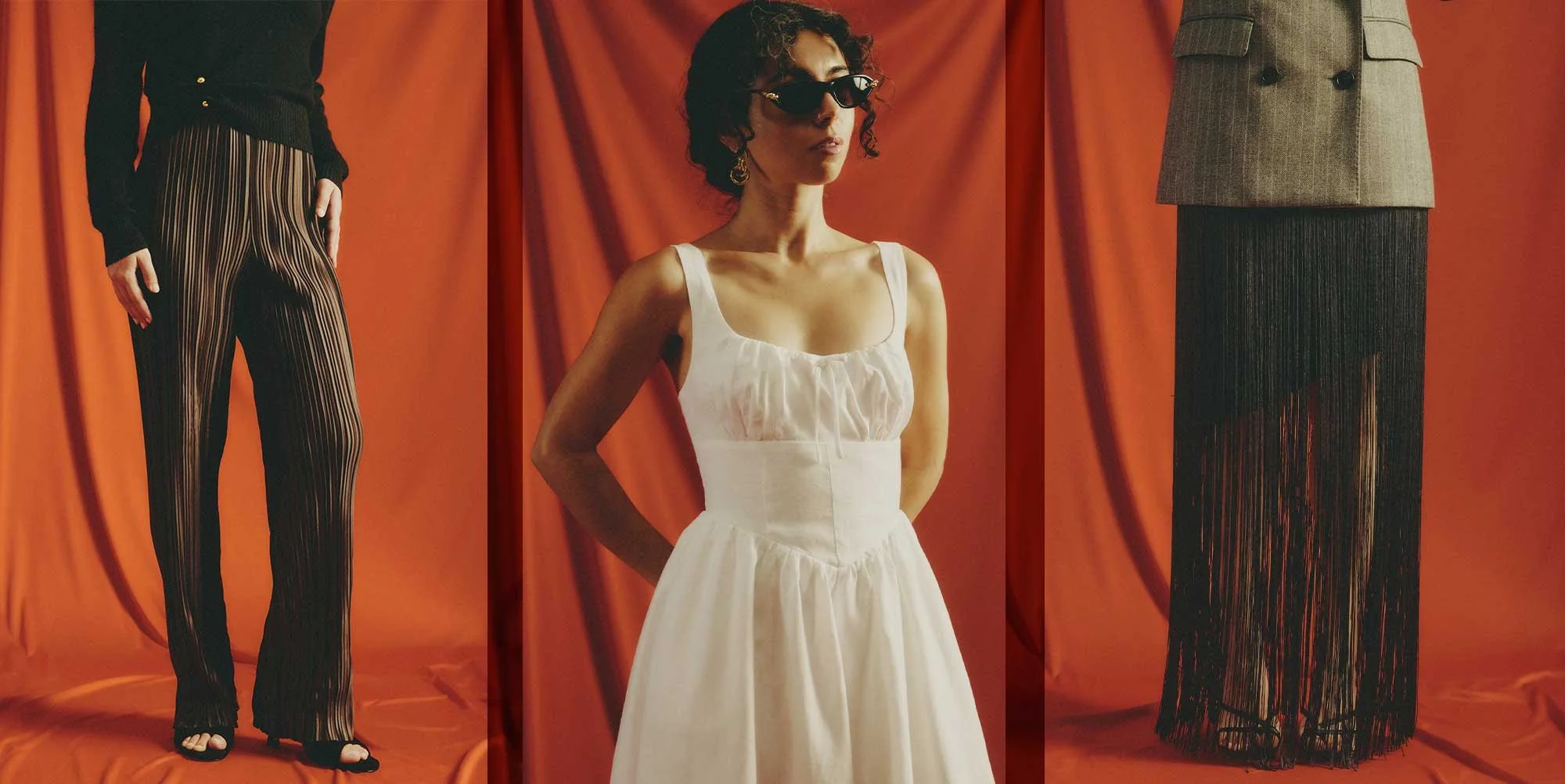
Next pants (petite); Reformation dress (petite), Reiss blazer (petite), Karen Millen dress (petite).
Meanwhile, ruching and shirring commonly form horizontal arrangements:
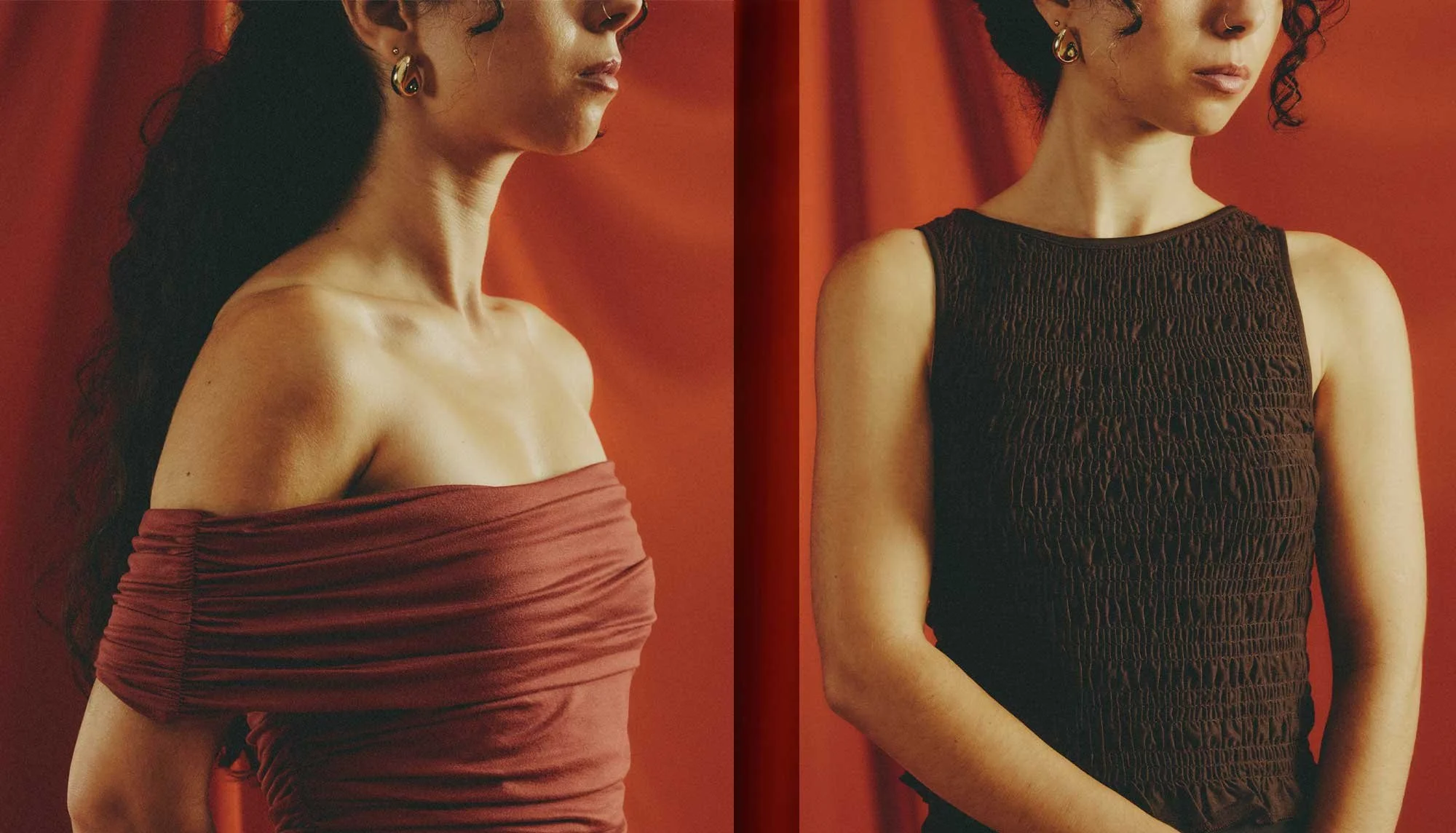
Boden dress (petite); Next top (petite).
Here’s how Alex could use texture to downplay her torso’s length and highlight the length of her legs:
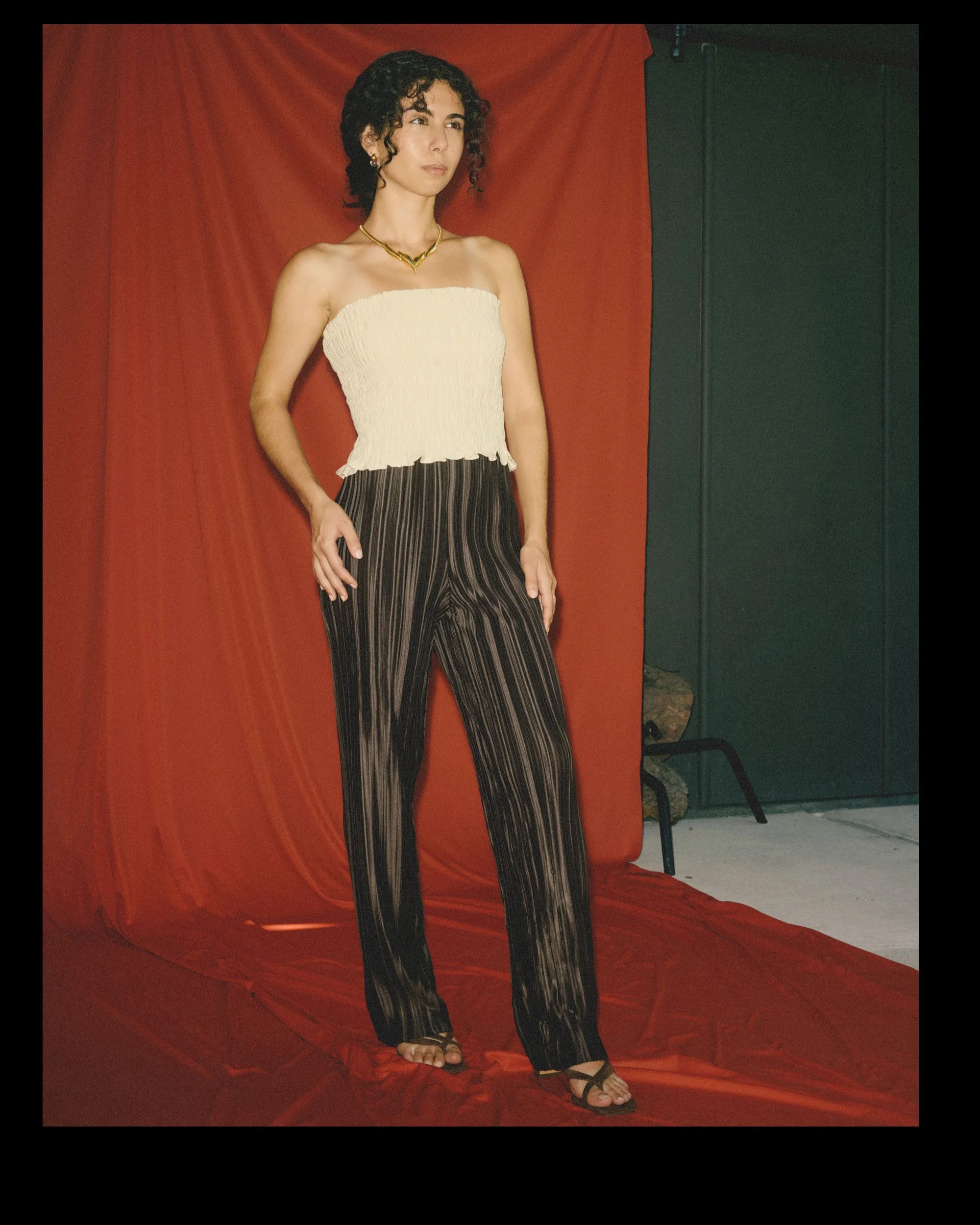
LNA top, Next pants (petite).
Shirred top: The horizontal rows draw attention across her torso, downplaying its length.
Plissé bottoms: The long vertical folds guide the eye down her legs, emphasizing their length.
Putting It All Together
All these design elements work together. For example, a top with a horizontal pattern could be paired with high-rise, full-length pants. I intentionally focused each outfit on one design element to make the strategy as clear as possible.
Now that you recognize the principles, you can mix them in ways that feel like your personal style. Start with an outfit you already own and try changing one element. Notice how it affects the balance between your torso and legs.
Petite Garments May Come Up Short
One last note on shopping: if you’re close to 5′4″ / 163 cm and have a proportionally long torso, some regular-size clothing may offer a better fit than petite sizing.
A 2016 study found that the U.S. petite sizing standard it examined generally represented women with proportionally shorter torsos. If petite tops end too high or dress waistlines sit above your natural waist, regular sizing is worth trying.
This applies to tops, dresses, rompers and jumpsuits – particularly styles without long sleeves or full-length hems. Otherwise, you may find that the torso fits well but the sleeves or hems need shortening. Those alterations are often easier and less expensive than lowering a waistline, which may not even be possible.
One Piece of the Puzzle
This is only part of the styling guidance I have for you. Your vertical proportions are only one part of your frame. Your horizontal proportions, curves and scale also inform your personal style protocol. If something here didn’t feel quite aligned with your frame, it may be because we haven’t yet factored in its other dimensions.
There are also strategies that apply to all Shorties, regardless of body type. To keep this article focused and practical, I’ve concentrated on those specific to a proportionally long torso and short legs.
Interested in a customized style guide based on your frame? Email me to inquire about the Shortie Style System.
In Short
Being short doesn’t mean every part of your frame is proportionally short. Conventional petite advice can be helpful, but making it work for your proportions may mean straying from some of it – strategically, of course.
For a proportionally long torso and short legs, the strategy is to downplay your torso’s length and highlight your legs’ length. Line, shape, pattern and texture give you different ways to do that without memorizing a long list of what to wear.
The more you understand your canvas, the more empowered you’ll be to step out every day wearing a masterpiece.
COPYRIGHT NOTICEThis article required extensive research and is registered and protected by the United States and international copyright law. If you wish to make any use of any materials or contact me for further information please address your request here.Which styling possibilities caught your eye?
A cropped top paired with a sweeping hem, or perhaps a mix of horizontal and vertical details… tell me which pairing you’re inspired to try!